My goal is to create
content that connects for
communities that respond.
A working selection of social media, email campaigns, broadcast audio and editorial writing. Produced across freelance, internship and broadcast settings.
A short introduction.
A storyteller with a professional eye for channel, audience, and outcome.
On the feed.
Selected social work - design, copy, and short-form video produced for Curve Theatre.
Reel — Instagram
A short-form video I produced, directed, and edited for Curve’s social media channels, which led to an increase of young people signing up for the 16-26 membership.
The reel is embedded below; tap to play it in-frame.
Curve Theatre — Arts Bingo
A playful, cultural experiences graphic created for Curve Theatre’s in-person events - designed to increase community engagement with one another and break the ice in a fun and easy way.
In particular, this Bingo game was designed for the National Youth Advisory Board meeting, wherein I co-hosted 11 theatres across the UK at Curve.

By design.
Print and brand collateral. Leaflets and business cards designed for client use across promotional and customer-facing materials.

TyreZone Leicester — Promotional Leaflet
A full‑page promotional leaflet designed for TyreZone Leicester, balancing brand colours and clear service messaging with a strong product hero. Designed to work as both a handout and a window/wall display piece.
TyreZone Leicester — Business Card
A business card design extending the TyreZone Leicester brand into a small, tactile format. The QR code anchors the front, with the four core services listed for instant recognition at a glance.

In the inbox.
Campaign design and copy. Clear hierarchy, distinctive layouts, and a single, focused call to action.

Branded email campaign
A promotional email newsletter designed from header-to-footer, showcasing a new line of retail products. Designed and written by me.
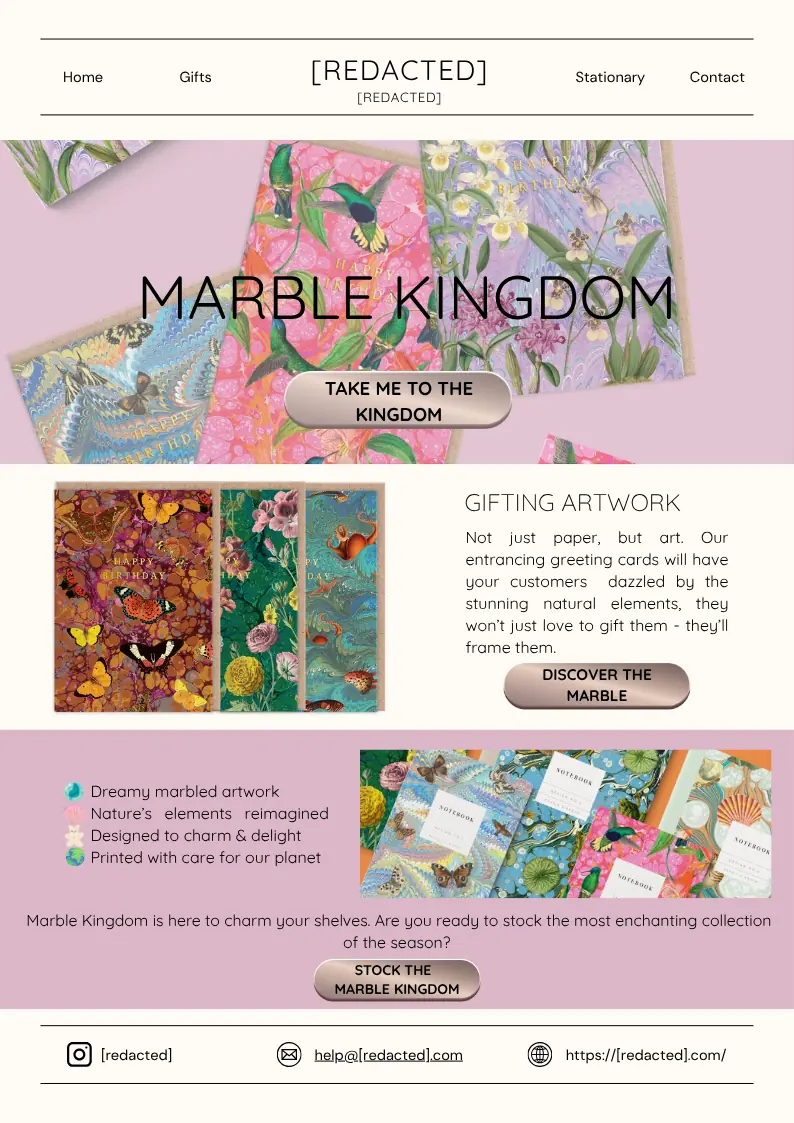
Branded email campaign
An iteration of the first design, demonstrating brand consistency.
On the air.
Snippets of segments and song introductions for Takeover Radio 106.9 - written, recorded, and edited for live broadcast. Please note these audio clips have been edited as snippets and therefore are not whole episodes.
FOSAC 2025 Promo
Snippet of a 2min advertisement for The Festival of Science and Curiosity.
25′′
Social Media is Impacting our Youth
A live segment from a series I produced, interviewing young people about society, life after graduation, and pop culture.
55′′
Stupid in Love by MAX
A scripted introduction for a MAX track on the show.
22′′
Super Sad by Suki Waterhouse
A short spotlight segment featuring Suki Waterhouse.
27′′
Ancient Dreams in A Modern Land by MARINA
A scripted introduction for a MARINA track on the show.
19′′
In print.
Features written for Mindless Magazine. Tap any piece to read it in full.
The Connection Between Mental Health and Nature

Spending time in nature and going on walks can sometimes feel like a mundane task, but it may be more important than we think. Being surrounded by greenery can 'improve your mood, reduce feelings of stress or anger,' and reduce the all‑consuming emotion of loneliness. Nature is healing to us.
Sertraline or going outside?
The number of people struggling with mental health disorders is drastically increasing. In the last decade, 'there has been a 13% rise in mental health conditions.' More and more people are suffering without the correct help they need and 'most people do not have access to effective care.' Although exercising and spending time outdoors is not going to magically heal anyone and free them of depression, it can aid in making one feel better. There is a power in nature that can relieve moments where one may feel anxious or overwhelmed with sadness.
Research shows 'stress is relieved within minutes of exposure to nature as measured by muscle tension, blood pressure, and brain activity… Nature also boosts endorphin levels and dopamine production, which promotes happiness.' For many, spending time in greenery can act as an antidepressant or an antistress medicine; it can be particularly freeing and reduce cortisol levels significantly. Despite this, it is not the same for each person and some can enjoy nature whilst simultaneously being on medication for their mental health disorder.
Vitamin D plays a role
In countries where we see the sun less, some people may develop 'Seasonal Affective Disorder (SAD)', otherwise known as "Seasonal Depression." Some of the typical symptoms of SAD are 'lack of energy, difficulty concentrating, losing interest in sex,' and feelings of anxiousness.
But is there a link between vitamin D and depression? Research shows 'many people who have depression also have low circulating levels of vitamin D in their blood,' and the two may be related. Additionally, research shows 'Vitamin D deficiency leads to both medical and psychosocial problems.'
Ultimately, both being outside in nature and maintaining vitamin D levels may aid in soothing some stress or emotions of sadness, and 'increase pleasant feelings.'
The Role of Forests in Reducing Climate Change
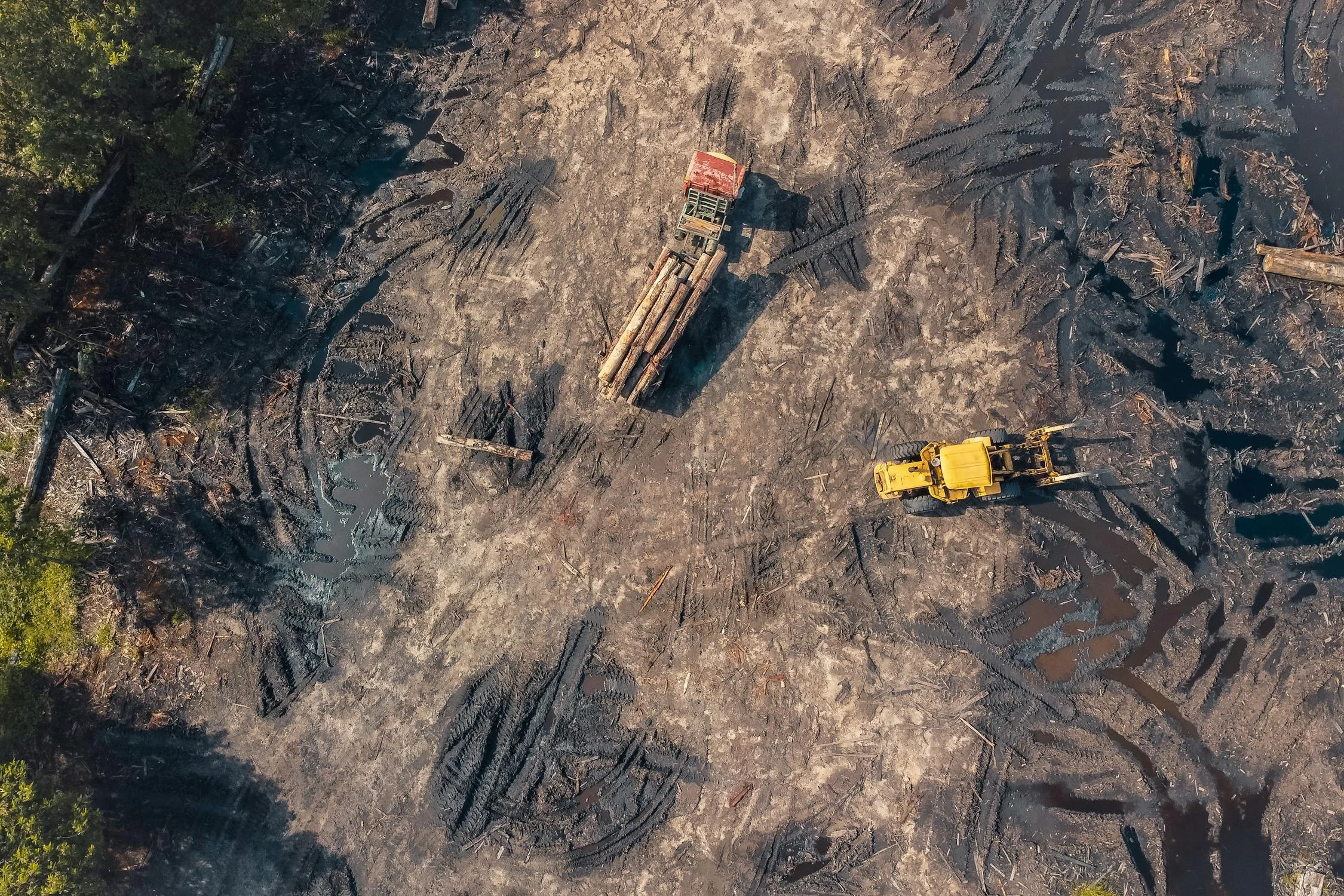
Forests cover around '30% of the world's land surface' and are therefore an incredibly important part of biodiversity and the ecosystem. However, humans cutting them down results in releasing more CO2 into the air and harming the climate.
Why we need forests
Forests are important in protecting biodiversity, regulating ecosystems, and they 'play an integral part in the carbon cycle.' Not only do they provide beautiful views, they are essential for our planet's health and future; they 'contribute to soil and water conservation, carbon storage and clean air.'
They provide shelter and protection for life on earth and 'more than half the world's land‑based plants and animals, and three‑quarters of all birds, live in and around forests.' Without forests, the entire ecosystem begins to collapse. By cutting down our trees and forests, we release CO2 into the air and contribute to climate change. Protecting forests must become a priority in order to keep our planet alive.
Deforestation and the greenhouse effect
Simply put, deforestation 'contributes 12–20% of global greenhouse gas emissions.' Greenhouse gases are released in the earth's atmosphere and they trap heat. Without these gases creating this greenhouse effect, 'temperatures would drop to as low as −18°C (−0.4°F); too cold to sustain life of earth.'
However, humans are dramatically increasing the release of greenhouse gases through harmful activities such as deforestation, and this is rapidly changing the earth's natural greenhouse effect and causing harm to our planet. Another harmful effect of deforestation is that it can cause some tropical forests 'the loss of as many as 100 species a day.' Many 'scientists agree greenhouse gases are the cause of global warming and climate change.'
What can we do?
Reducing greenhouse gases cannot be done overnight, but we can all play a part in saving our environment. This can be done 'from simple changes, like reusing and recycling, to bigger lifestyle decisions like switching to electric vehicles.' Moving on to renewable energy sources such as wind and solar can mitigate greenhouse gases and help protect our planet.
Intersectional Feminism: What and Why?

Many of us pride ourselves on being feminists, but are we actually as inclusive as we may think we are? Perhaps we don't always take into consideration women from marginalised groups when thinking about what feminism means to us. Here's why it's important.
What is intersectional feminism?
The term 'intersectionality' was coined by Kimberle Crenshaw in 1989. Crenshaw used the term to describe how characteristics such as class, race, and gender intersect. Crenshaw says it is 'the idea that we experience life, sometimes discrimination, sometimes benefits, based on a number of identities.'
We can take Crenshaw's definition of intersectionality and apply it to feminism, too. Intersectional feminism provides another lens for individuals and can give us perspective to help understand others' struggles. The feminism we see in the mainstream media is often centred around the struggles of white, middle‑class women, with no room for different experiences. However, through intersectionality within feminism, we learn more about different experiences and battles than our own.
An example that remains prevalent currently would be the Gender Wage Gap: although women typically make less than men in the workforce, 'women of minority groups make even less.' Focussing on just "White Feminism" is not true to feminism as a movement. Simply listening to one another enables inclusivity within feminism and broadens our perspectives.
Why we need intersectionality now more than ever
As internet 'incel culture' grows bigger and influences more and more young men and boys, it becomes clear that we need intersectional feminism more than ever. Videos on social media such as Andrew Tate's misogynistic views that berate feminists and women have been becoming viral, and potentially influencing young boys' minds as they infiltrate into their social feeds.
Social media pages such as Tate's do a good job of undoing everything the feminist movement has been working so hard for. His 'extreme misogyny' fuels the internet's 'incel culture' and there are hundreds of pages just like his, doing the same violent thing. It's more important than ever that women come together and listen to one another, and uplift each other.
The Invisible Barriers: The Effects of Poor Mental Health on Students
Education has plenty of barriers, and one of the toughest ones is the invisible and unfortunate mental health struggles that students increasingly are facing. The number of students going through 'mental health difficulties has reached four in five.' Poor mental health has extremely negative effects on students and their academic performances, which can lead to unfortunate situations like worsening mental health issues, dropouts, and sometimes cases of suicide.
Are universities doing their part?
Due to lack of support or diagnoses of mental health issues, many students face struggles such as depleting energy levels, lack of concentration, increased stress, and a 'hindering performance.' This becomes a clear disadvantage to students with these struggles, and I believe universities must do a better job on caring for their students who face these issues and provide support so they can have the same opportunities such as their counterparts.
Some universities are actively trying to help students by providing a limited number of counselling sessions for those experiencing mental health struggles. This is a positive step into the right direction, as counselling can be expensive and unaffordable at times. Additionally, some 'students say access to counselling leaves them more able to cope with the pressures of daily life.'
The stigma remains
University is a huge change from primary and secondary school education. It challenges students, and through this many people find out more about themselves and the way they learn; so much so that there are students who get to university and realise they might have been struggling with dyslexia/ADHD/depression and have never received help.
However, some students may feel embarrassed or unable to find the correct help information from their universities, so they suffer more, and it affects their academic performances and stress levels. To reduce this from happening, there is still a long way to go in removing the stigma surrounding the conversations about mental health struggles. However, a great way to do this is through the use of social media and specifically easy‑to‑digest media like TikToks and Reels; many individuals are open about their mental health struggles on TikTok and Instagram, which decreases the stigma.
With increasing support for students with mental health struggles, I remain optimistic that we will see useful changes to the education system for the better.